Remote Connect Sql Server
- Connect Remote Sql Server Over Internet
- Connect Remote Sql Server C#
- Connect Remote Sql Server Configuration Manager
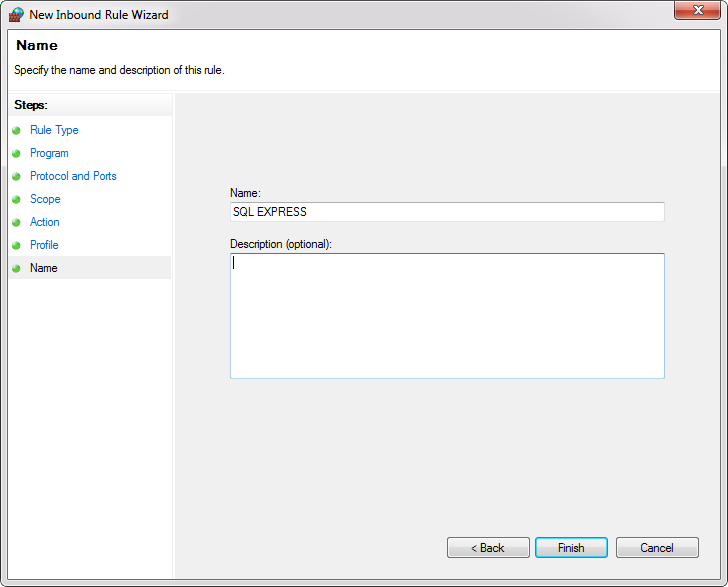
After you provision a Microsoft Azure VM with SQL Server there are a few more steps that you need to take to make remote connections. The procedure below starts with a fresh Azure VM provisioned and walks through the process of establishing a connection via SQL Server Management Studio, installed on an on-premises work station.NOTE: This article is applicable to azure classic deployments only. Create a new Azure TCP/IP endpointStart by accessing the Azure portal and navigating to your new VM.Drill into your VM, navigate to the ENDPOINTS tab, and click ADD to create a new endpoint.A wizard will appear. Select ADD A STAND-ALONE ENDPOINT and click the right-arrow.Use the drop-down box to select MSSQL and edit the ports, if you choose.Click the check mark to complete and then wait for the Azure portal to tell you that the endpoint has been created.Remote desktop into your VMOnce our endpoint is created we will need to do some work with Windows and SQL Server. Navigate to your Azure VM Dashboard and download your customized.rdp file with the CONNECT button.Connect to your VM via the downloaded.rdp file.Verify TCP/IP is enabled for SQL ServerOpen up SQL Server Configuration Manager and enable the TCP/IP protocol, if it is not already. In the VM image that I provisioned for SQL Server 2016 CTP 3.0 the TCP/IP protocol was enabled but it is always good to verify.Configure SQL Server for Mixed Mode authenticationOpen SQL Server Management Studio, right-click on your instance in the object explorer and select Properties. On the Security page, select the SQL Server and Windows Authentication mode radio button and hit OK. Finish up by restarting your SQL Server instance for the setting to take effect.Open your SQL Server connection portFinally we have to open up the SQL Server connection port in the Windows Firewall with Advanced Security by creating a new inbound rule.When the wizard opens, select the rule type Port and click Next.Specify your port and click Next.Allow the connection and then click Next.Another Nextfollowed by a name for your rule and click Finish.ConnectNow it is time to test.
SQL Server TCP/IP Connection with sqlcmd. TCP/IP is well known to us. In order to connect to a SQL Server instance using the TCP/IP protocol you need the server’s IP address or the host name and the listening port if your instance doesn’t run on the default port. Configuring remote access on a SQL Server instance. To enable remote connection on SQL Server right – click on the server and select the Properties option. In the Server Properties dialog under the Connections tab check the Allow remote connections to this server option: Go to Start-Programs-Microsoft SQL Server 2005/2008/2012 -Configuration.
Disconnect from your remote desktop session and launch SSMS on your work station. Connect using your Azure DNS nameSUCCESS!

. “Cannot connect to SQL-Server-Instance-NameAn error has occurred while establishing a connection to the server. When connecting to SQL Server 2005, this failure may be caused by the fact that under the default settings SQL Server does not allow remote connections. (provider: SQL Network Interfaces, error: 28 – Server doesn’t support requested protocol) (Microsoft SQL Server)”.
“Cannot connect to SQL-Server-Instance-NameAn error has occurred while establishing a connection to the server. When connecting to SQL Server 2005, this failure may be caused by the fact that under the default settings SQL Server does not allow remote connections. (provider: SQL Network Interfaces, error: 26 – Error Locating Server/Instance Specified) (Microsoft SQL Server)”.
“Cannot connect to SQL-Server-Instance-NameLogin failed for user ‘ username‘. (Microsoft SQL Server, Error: 18456)”To enable remote connection on SQL Server 2008 Express, see the step below:. Start SQL Server Browser service if it’s not started yet. SQL Server Browser listens for incoming requests for Microsoft SQL Server resources and provides information about SQL Server instances installed on the computer.
Enable TCP/IP protocol for SQL Server 2008 Express to accept remote connection. (Optional) Change Server Authentication to SQL Server and Windows Authentication. By default, SQL Server 2008 Express allows only Windows Authentication mode so you can connect to the SQL Server with current user log-on credential. If you want to specify user for connect to the SQL Server, you have to change Server Authentication to SQL Server and Windows Authentication.Note: In SQL Server 2008 Express, there isn’t SQL Server Surface Area Configuration so you have to configure from SQL Server Configuration Manager instead. Step-by-step to enable remote connection on SQL Server 2008 express. Open SQL Server Configuration Manager. Click Start - Programs - Microsoft SQL Server 2008 - Configuration Tools - SQL Server Configuration Manager.
On SQL Server Configuration Manager, select SQL Server Services on the left window. If the state on SQL Server Browser is not running, you have to configure and start the service. Otherwise, you can skip to step 6. Double-click on SQL Server Browser, the Properties window will show up. Set the account for start SQL Server Browser Service. In this example, I set to Local Service account. On SQL Server Browser Properties, move to Service tab and change Start Mode to Automatic.
Therefore, the service will be start automatically when the computer starts. Click OK to apply changes. Back to SQL Server Configuration Manager, right-click on SQL Server Bowser on the right window and select Start to start the service.
On the left window, expand SQL Server Network Configuration - Protocols for SQLEXPRESS. You see that TCP/IP protocol status is disabled. Right-click on TCP/IP and select Enable to enable the protocol. There is a pop-up shown up that you have to restart the SQL Service to apply changes. On the left window, select SQL Server Services. Select SQL Server (SQLEXPRESS) on the right window - click Restart. The SQL Server service will be restarted.
Open Microsoft SQL Server Management Studio and connect to the SQL Server 2008 Express. Right-click on the SQL Server Instance and select Properties. On Server Properties, select Security on the left window. Then, select SQL Server and Windows Authentication mode.
Again, there is a pop-up shown up that you have to restart the SQL Service to apply changes. Right-click on the SQL Server Instance and select Restart. That’s it. Now you should be able to connect to the SQL Server 2008 Express remotely. This was really helpful but unfortunately I still can’t get a connection.
I’m trying to use the “ASP.net SQL Server Setup Wizard”. Every time I try to get a list of the databases in SQL Server I get the remote connections error:“Failed to query a list of database names from the SQL server. A network-related or instance-specific error occurred while establishing a connection to SQL Server.
The server was not found or was not accessible. Verifty that the instance name is correct and that SQL Server is configured to allow remote connections. (provider: Named Pipes Provider, error: 40 – Could not open a connection to SQL Server)”. Hi, GautamCould you share what registry that you changed?About your problem (error code 18456), you should look into the SQL Server’s log which is located in Program FilesMicrosoft SQL ServerMSSQL. NMSSQLLOGERRORLOG and ERRORLOG.
You will see more details on the error message. The example error message should looks similar to this:2006-02-27 00:02:00.34 Logon Error: 18456, Severity: 14, State: 8You see that there is state number which tell the detail of the error message. Here are some common error states and their descriptions:2, 5 - Invalid userid6 - Attempt to use a Windows login name with SQL Authentication7 - Login disabled and password mismatch8 - Password mismatch9 - Invalid password11,12 - Valid login but server access failure13 - SQL Server service paused18 - Change password requiredReference:Hi, DanielCheck your SQL Server’s name to see if it is correctly. This wizard always generates the server name as MachineName. But if you are using SQL Server express, it should be MachineNameSQLEXPRESS. @PBC – Hey I also got the same error “The service cannot be started, either because it is disabled or because it has no enabled devices associated with it.”. I solved it by the following steps1.
Start - Run2. Type “services.msc” and click “Ok”3.
Locate “SQL Server Browser” service4. Right click on it and select “Properties”5. In “General” tab select “Automatic” in “Startup type”6. Goto “Logon” tab7.
Select “Local System account” in “Log on as” section8. Click on “Ok”9. Now right click on the service and select “Start”. “A network-related or instance-specific error occurred while establishing a connection to SQL Server. The server was not found or was not accessible. Verify that the instance name is correct and that SQL Server is configured to allow remote connections.
Connect Remote Sql Server Over Internet
(provider: Named Pipes Provider, error: 40 – Could not open a connection to SQL Server)”The above is the error I recieved and I have expended days on this incredibly annoying issue – I have trawled through forums and Google looking for answers, made changes to my Registry, contacted the rather stupidly named “Microsoft help”, uninstalled and re-installed SQL Server 2008 on numerous occasions and generally been ready to dump my Windows machine in the bin. I eventually arrived at this site, looked at the comments above and found that my SQL Service was not Listening on port 1433!This is why people turn away from MS products. I am glad to see their market share dwindle slowly but surely and await the day when they will, end up where the sun doesn’t shine.
I hope its sooner rather than later!Rant over – btw – thanks to your post and the commentators. I got a named SQL server 2008R2 instance running on a 2008R2 Terminal Server.
Mixed authentication is activated because my application connects with user and password via ODBC.When I logged in with admin rights, the application can access the database without any problems. When I’m logged in as a normal user I can’t get access to the database. Do You got any suggestions to solve this problem?When I establish a new ODBC connection to a SQL server/database running on a separate maschine it works with normal user rights. So I think the problem relies to the local instance of SQL Server 2008R2.Thanks in advance for Your help.Regardsmichael.
I have 5 computers connecting to a DB3 connecting fine, but 2 are not connecting, all computers are winXP Pro SP3This is the error message that I get from the two computers I cannot connect:Error Number: -SQL 2008 could not open a connection to SQL server 53I know something is blocking the connection, but not sure what it is.Why the other computers can connect, all are connected to the same router, switch etc.I can see all computer within network, I am able to ping the server from the computer I cannot connected to the DB.Thank you. Hi,I followed the entire guide. I disable windows firewall, enable DMZ mode for my computer with mssql server.I am able to connect from a differnt PC under the same LAN.
However when I try to connect from a PC under a different network using SQL Server Management Studio and it doesn’t work and gave me error 26. I followed one of your links on solving error 26 you provided and followed the content listed below:) Make sure your server name is correct, e.g., no typo on the name.2) Make sure your instance name is correct and there is actually such an instance on your target machine. Update: Some application converts to. If you are not sure about your application, please try both ServerInstance and ServerInstance in your connection string3) Make sure the server machine is reachable, e.g, DNS can be resolve correctly, you are able to ping the server (not always true).4) Make sure SQL Browser service is running on the server.5) If firewall is enabled on the server, you need to put sqlbrowser.exe and/or UDP port 1434 into exception.I am pretty sure I meet the requirements for all 5 points above. For part 3, I am able to ping the server in command prompt, is that good enough?Anyways I am totally clueless as what is wrong in my configuration.
I would very much appriciate it if you can give me some pointers.Thanks! One thing that hung me up for a while was the different “modes” of Windows Firewall — domain, private, and public. In testing, I had only shut off Domain, where I should have disabled the other two. Of course, the best thing to do is to add an exception for the particular port you’re using across all 3 modes.@Jeff, perhaps try looking at your TCP/IP configuration in Sql Server Configuration Manager (as described above), but double-click on it to examine the settings. In the “IP Addresses” tab, make sure the correct IP addresses and ports are enabled and set (you probably want to clear “Dynamic Ports” and enter a static port # in “TCP Port” – most people pick 1433). Go to the bottom, to IPAll, clear “Dynamic Ports”, and put in the desired port # in “TCP Port” just like the ones you have enabled above.– Stephen.
I’ve followed every stepno problems and then I get step 10. It says ‘connect to SQL server 2008 express’ but I still can’t do this!Get the following error message.It’s driving me mad.any advice gratefully received!!!TITLE: Connect to Server——————————Cannot connect to (local).——————————ADDITIONAL INFORMATION:A network-related or instance-specific error occurred while establishing a connection to SQL Server.
The server was not found or was not accessible. Verify that the instance name is correct and that SQL Server is configured to allow remote connections. (provider: Named Pipes Provider, error: 40 – Could not open a connection to SQL Server) (Microsoft SQL Server, Error: 2)For help, click:——————————BUTTONS:OK——————————.

Hiya!This has been incredibly useful, however, I’m still falling down at the last hurdle of getting an ODBC connection from a machine that is also running SQL Server 2008 Express. I can register the remote server via SQL Server Management Studio, I’ve changed the port to 1433 in the TCP/IP configuration and then when that didn’t work to 14330 as per someone else’s suggestion. However, the error I’m getting with my ODBC connection is:Connection failed:SQLState: ‘010000’SQL Server Error: 11004MicrosoftODBC SQL Server DriverTCP/IP SocketsConnectionOpen (Connect).Connection failed:SQLState: ‘08001’SQL Server Error: 6MicrosoftODBC SQL Server DriverTCP/IP SocketsSpecified SQL server not found.So the configuration is:Machine 1: Windows XP, SQL Server 2008 Express.
Remote connectivity enabled.Machine 2: Windows XP, SQL Server 2008 Express. Can add Machine 1 to SQL Server Management studio but not set up an ODBC connection. Can connect via ODBC to machine 3Machine 3: Windows 7, SQL Server 2008 Standard. Can add Machine 1 to SQL Server Management studio and connect via ODBC to Machine 1What could it be on Machine 2 that will stop me connecting to one server via ODBC but not another?
I’d like to ask you, since I do not have Microsoft SQL Server 2008 Management Studio Express installed on the PC that’s running the SQL Server 2008 R2, how do I connect to it from another PC.I installed the SQL Server on a Virtual Machine. I’m able to connect to the VM, but the problem is that I followed the above tutorial till I got to the point where I’d have to work further with Microsoft SQL Server 2008 Management Studio Express but I’m not able to finish up because I don’t have it installed.I will like to use another program to connect to the server.
Connect Remote Sql Server C#
Please, how do I do it. Hi guys,I’m VS 2008 to upload excel sheet in remote machine. But local machine, it was working fine. And its through the error like below, while I’m uploading excel sheets in applications.
Please go through below,please help me to resolve the issue, I’m in critical situtaion. Any help will be greatly appreciated. I did all cahnges in remote machine even I’m installing the SQl 2005 in remote server and enable the port 1433 in firewall, and enable the database engine to local & remote connections. But still the below errors are appear.please help me to solve the issue, its my humble request.A network-related or instance-specific error occurred while establishing a connection to SQL Server.
Connect Remote Sql Server Configuration Manager
The server was not found or was not accessible. Verify that the instance name is correct and that SQL Server is configured to allow remote connections. (provider: Named Pipes Provider, error: 40 – Could not open a connection to SQL Server)Description: An unhandled exception occurred during the execution of the current web request. Please review the stack trace for more information about the error and where it originated in the code.Exception Details: System.Data.SqlClient.SqlException: A network-related or instance-specific error occurred while establishing a connection to SQL Server. The server was not found or was not accessible. Verify that the instance name is correct and that SQL Server is configured to allow remote connections.
(provider: Named Pipes Provider, error: 40 – Could not open a connection to SQL Server)Source Error:An unhandled exception was generated during the execution of the current web request. Information regarding the origin and location of the exception can be identified using the exception stack trace below.Stack Trace:SqlException (0x80131904): A network-related or instance-specific error occurred while establishing a connection to SQL Server. The server was not found or was not accessible.
Verify that the instance name is correct and that SQL Server is configured to allow remote connections. Dear linglom,I’m checking that SQL server is running, and the connection string also working fine in all other modules. But especially the when i import excel sheets in my application, the instance error throws.1. Can you please giude me more on this and please giude how can i check that, Is ther any firewall blocking the connection between the SQL Server and the remote machine.??2.
I’m also checking the instance with conenction string like data source=”zakdb01zakat,1433etc”. – but there is no use of it.please help me to reolve this issue.Anyhelp will be greatly appreciated. I’m in critical situation.ThanksMubarak. What “nonstandard” happened to me when I was configuring remote MSSQL (maybe someone said it above):– my SQL Server process didn’t open on standard 1433 port, but some 50000 (check it in netstat)– On client I used Server’s port, not Server Browser’s– Windows Firewall by default blocks Server’s port! I disabled it totally until I made it work.– pay attention to User name and domain you are using – I used same (domain) user remotely, as I installed server on, and it workedFirst make it work at all costs.
Then play with setting ports, firewall and so on.